Joy Stamina
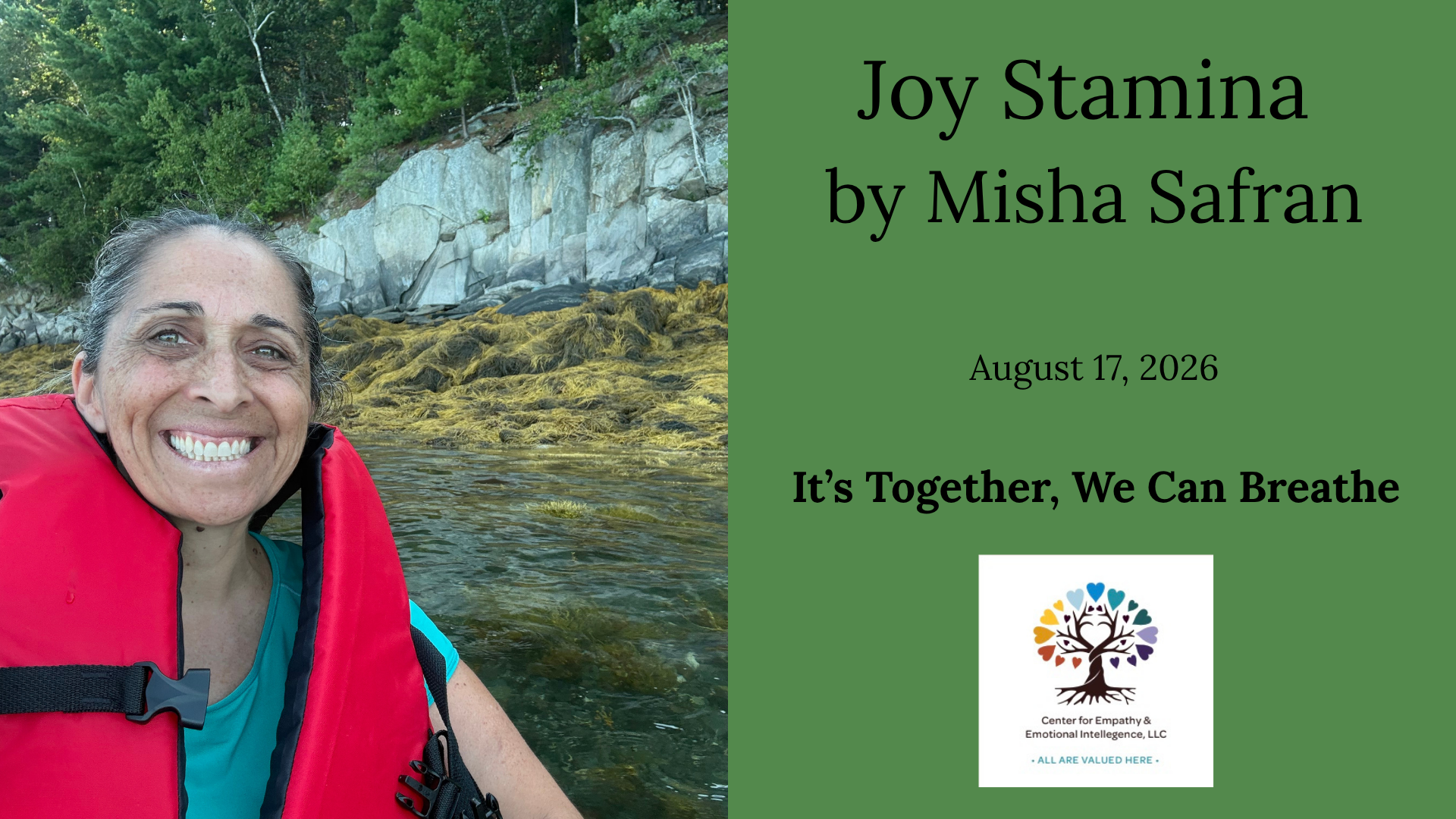
I have been walking through a lot of interesting experiences; some with much joy, others with deep grief and pain. So I thought it was a good time to introduce Joy Stamina. Which is a practice I use to keep myself in check and moving through life thriving instead of just surviving.
What is Joy Stamina? Joy Stamina is our ability to move through pain with greater resilience while continuing to make space for joy. What are your pains right now? Difficult work situation? Divorce? Estrangement? New physical limitations? Career change? Death of a loved one (human and/or pet)? Relocation? Empty nesting? The list goes on. There are so many shifts that cause us to feel deep pain.
Often, we don't allow ourselves to feel the joy as deeply as we allow ourselves to feel the pain. Why is this? When writing about the brain's negativity bias, Dr. Rick Hanson uses the metaphor that the brain is like Velcro for negative experiences and Teflon for positive ones. How awful is that?!! The good news it that we can do something about it because our brains are amazing learners.
Did you know we are allowed to hold on to them equally? It's true. Yet, many people feel like they don't deserve joy because bad things keep happening. Is that you? Some people feel like they can't embrace their joy because the other shoe is just going to drop sooner than later. Is that you? And then there is the group that feels guilt and shame for feeling their joy because of all the suffering going on elsewhere. Is that you?
Ready for another truth bomb? Our world needs you to build your joy stamina so you can do peopling better, so you can help others, and so you can be a kinder human. The happier we are, the more positive impact we make. This isn't toxic positivity. It is an important duality we must embrace in order to find our humanity again.
So what do we do so these heavy happenings in our lives don't overshadow the goodness? There are several things you can do but I will offer one example below:
Acknowledge the pain, the heaviness, the grief and take a deep breath.
Then, choose to welcome in this pain, heaviness, and/or grief as often as it needs to show up. However, set some boundaries with it. This might mean giving it ten minutes in the morning, afternoon, and/or evening or simply acknowledging it with a hello. If it comes in when you are needing to feel joy or accomplish other things, kindly ask it to wait until you have scheduled dedicated time together. If it comes in because you are not doing anything in particular, it is still recommended to set the boundaries. It sounds silly but it really works! Your brain is an amazing organ which you can train to support your well-being!
Once you have set the boundary to be with the pain, heaviness, and/or grief, then take a deep breath again and spend just a few moments to identify three things for which you are grateful. Examples are being grateful to still have toothpaste left this morning because you forgot to go to the store last night, or things like having comfortable sheets, clean water to drink, easy access to coffee, a good friend in your life, etc. Another example for gratitude creation is to reframe the pain. For example: I have chronic pain and sometimes when I watch other people do the things I used to be able to do, I feel sad. To reframe this I say: I am grateful that my body allowed me to play sports for so many years and despite my pain, my body is still very strong.
Once you have identified your three gratitudes, say them to yourself (out loud is fine too) three times. Take another deep breath and commit to staying in gratitude until the next time the pain, heaviness, and/or grief visits again.
Now I want to hear from you! What is one thing (big, small, or medium) that is bringing you joy right now? Add it to the comments so we can give a little more airtime to life's beauties.
With Empathy and Joy
Misha Safran, MA, PCC
Keynote Speaker & Leadership Trainer and Coach
Land Acknowledgement: Born on the land of the Anacostans, Piscataway, and Pamunkey peoples. Currently living on Wabanaki land.
All are valued in my practice: BIPOC, LGBTQIA+, humans of all backgrounds and ages. I hope to support a safer and braver space for all professionals to do peopling better.